
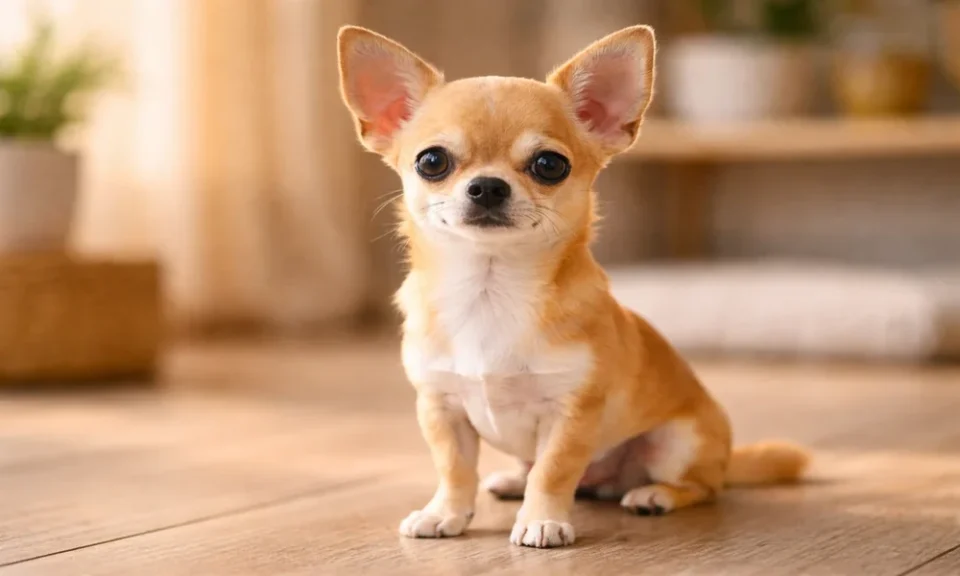
Show Quality vs. Pet Quality: What the Labels Actually Mean
Before you can choose between a show Chihuahua and a pet Chihuahua, it helps to understand what those labels actually describe. They point to two different breeding goals – not two different levels of worth. A show-quality Chihuahua is bred to match the AKC breed standard closely enough to step into a conformation ring and compete. A pet-quality Chihuahua is a healthy, happy, well-socialized companion that might carry a few minor cosmetic deviations from that standard but is every bit as capable of living a long, joyful life curled up on your couch.
We put this guide together at Dreamer’s Pups because we’ve watched too many families tie themselves in knots over the show-vs-pet question when, honestly, the answer is usually pretty straightforward once you know what the labels mean.
And here’s the thing that gets misread all the time: “pet quality” doesn’t mean inferior. It just means the dog wasn’t built for the show ring. A lot of pet-quality Chihuahuas are actually healthier than their show-line cousins, simply because their breeders weren’t chasing extreme physical traits.
The Breeder’s Eye: How Quality Is Judged
Experienced breeders size up every litter with a trained eye for structure, movement, and breed type. We hold each puppy up against the AKC standard – head shape, topline, gait, overall balance. A puppy that stacks nicely and moves cleanly might get held back as a show prospect. The rest go home as companions, and that’s not a lesser outcome. It’s just a different one.
What most buyers don’t realize is that this evaluation happens before you ever see a listing. The breeder has already made the call. Your job is to understand what that call means for the dog you’re bringing home – and to feel good about it.
Physical Differences: The AKC Chihuahua Breed Standard Explained
The AKC breed standard paints a picture of the ideal Chihuahua: a compact, confident, alert little dog weighing no more than 6 pounds, with a well-rounded “apple dome” skull, a level bite, and a graceful, swift way of moving. Show-quality dogs are bred to hew closely to that picture. Pet-quality dogs might have a slightly off bite, a longer body, or a coat that doesn’t quite conform.
Here’s the reassuring part: none of these deviations affect health or temperament in most cases. They just mean the dog wouldn’t score well in a conformation class – and that’s perfectly fine if your goal is a loving companion, not a ribbon.
Coat Types, Size Variations, and Faults
Chihuahuas come in two coat types: smooth (short) and long. Both are fully accepted under the standard. Size variations exist too, though the official term is “tiny” rather than “teacup” – “teacup” is a marketing label, not a recognized breed classification.
Common faults that nudge a dog into the pet-quality category include:
- A bite that’s undershot or overshot
- Ears that don’t stand fully upright
- A tail that curls incorrectly
- A fontanelle (soft spot on the skull) that hasn’t closed
That last one deserves a closer look. A fontanelle that stays open is one of the few faults with genuine health implications, so it’s worth asking the breeder about it directly.
Temperament and Personality: Do Show Lines Differ From Pet Lines?
Show-line Chihuahuas get described as more intense and alert – traits that serve them well in the ring. Pet-line Chihuahuas, especially ones raised in a home environment, tend to be more relaxed and go-with-the-flow. But here’s the truth: temperament is shaped way more by socialization than by lineage.
A well-socialized pet Chihuahua is loyal, confident, and comfortable around kids and strangers. A poorly socialized show dog can be reactive and wary. The breeding goal matters less than the daily handling the puppy got in those critical first weeks.
Every puppy we raise at Dreamer’s Pups grows up right alongside family members – no kennel runs, no isolation. Socialization starts on day one, just from everyday life in a home full of love and activity.
Common Chihuahua Health Issues to Screen For
Chihuahuas are generally a long-lived breed, but they do carry some known health risks. Responsible breeders screen for the following before ever breeding a pair:
- Hypoglycemia, especially in very small puppies
- Patellar luxation, a slipping kneecap
- Heart conditions, including murmurs and patent ductus arteriosus
- Tracheal collapse, worsened by leash pulling
- Dental disease, common in toy breeds
Always ask for genetic testing and health screening documentation. A breeder who can’t produce it isn’t one you should be buying from. The OFA companion animal health database lets you independently verify some screening results, so you’re not just taking someone’s word for it.
Watch Out: Skipping the health screening question is the single most expensive mistake buyers make. A puppy with an undiagnosed heart condition can rack up veterinary bills that dwarf the purchase price within the first year alone.
What to Look for in a Chihuahua Puppy: A Visual and Behavioral Checklist
A healthy Chihuahua puppy has clear, bright eyes, a clean coat, and a curious, responsive way about them. Run through this checklist before you commit:
- Eyes are bright with no discharge
- Nose is cool and free of crusting
- Coat is full with no bald patches or itching
- Puppy approaches you willingly and doesn’t cower
- Belly is round but not bloated
- Gait is steady with no limping
- Breeder offers health guarantees in writing
- You can meet at least one parent
- Vaccination and deworming records are current
- The puppy has been raised indoors, not in a kennel run
Behavioral traits matter just as much as physical ones. A puppy that bounces back quickly after a startle is usually well-socialized. One that hides for minutes on end might need extra patience and work – and that’s okay, as long as you know what you’re signing up for.
Cost and Contract Differences: Show Rights vs. Pet Placement
This is the section most guides skip – and it’s the one that hits your wallet and your legal obligations the hardest. The price gap between a show-prospect and a pet-quality Chihuahua is real, and it’s driven almost entirely by registration status and breeding rights, not by how much the dog will love you.
What You Actually Pay
Pet-quality Chihuahua puppies from responsible breeders commonly fall in the $800 to $2,500 range, depending on lineage, coat type, and region. Show-prospect puppies – those with full registration and breeding rights – typically start around $2,500 and can exceed $5,000 for a dog from titled bloodlines. These are general market ranges, not quotes; always confirm with the individual breeder.
The premium isn’t buying you a “better” pet. It’s buying you the right to compete in conformation events and, in many cases, the right to breed. If neither of those is on your radar, you’re paying for access you’ll never use.
Full vs. Limited Registration: The Real Dividing Line
The American Kennel Club issues two registration types, and the difference is contractual, not cosmetic:
- Full registration: the dog can be shown in conformation, and any offspring it produces can be registered. This is what show contracts grant.
- Limited registration: the dog is still a purebred and still registerable, but it can’t be shown in conformation, and any puppies it produces can’t be registered. This is what pet contracts grant.
A limited-registration Chihuahua isn’t a lesser dog. It’s the same breed, often from the very same litter, placed with a contract that simply protects it from being bred.
The Clauses You’ll Sign
Pet contracts almost always include a spay/neuter clause. Common structures include:
- A requirement to spay or neuter by a set age (often 6 to 12 months)
- A refund of part of the purchase price once proof of the procedure is provided
- A right for the breeder to reclaim the dog if the clause is violated
Show contracts move in the opposite direction. They may waive the spay/neuter requirement, grant breeding rights, and include a co-ownership arrangement where the breeder retains a stake in the dog and a claim on a future litter. Co-ownerships are common in show circles and rare in pet placements.
Watch Out: Read every clause before you sign. A co-ownership or breeding-rights contract can obligate you to breed your dog, share litters, or keep the dog intact – obligations most pet owners never signed up for.
Which Contract Fits You
| Factor | Show Quality | Pet Quality |
| Typical price range | ~$2,500-$5,000+ | ~$800-$2,500 |
| AKC registration | Full | Limited |
| Breeding rights | Included | Excluded |
| Spay/neuter clause | Often waived | Required |
| Co-ownership possible | Yes | Rare |
| Purpose | Competition and breeding | Companionship |
For the overwhelming majority of households, a pet placement is the right call. You get the same loyalty, the same lifespan, and a contract that keeps the dog out of irresponsible breeding. The most common financial mistake buyers make is paying a show-prospect price for a dog they never intend to show – and then discovering the contract still restricts what they can do with it.
The Retired Show Dog Option: An Overlooked Path to a Great Companion
Almost no guide for prospective Chihuahua owners mentions this route, and it deserves more than a footnote. A retired show dog is an adult Chihuahua that has finished its conformation career – or been retired early – and is being placed as a companion. For the right household, it’s the single best value in the breed.
Why Retired Show Dogs Make Excellent Pets
By the time a show dog retires, it’s already been through more handling, travel, and structured socialization than most puppies ever receive. That history shows up in the home in some wonderful ways:
- House-training is usually done. Adult show dogs live with their handlers and are kept on routines.
- Crate and leash manners are established. They’ve spent plenty of time in crates, at shows, and on lead.
- Temperament is proven. You’re meeting an adult dog with a known personality, not guessing at a puppy’s future.
- Health history is documented. Show dogs are typically screened for patellar luxation, heart conditions, and other breed issues before they ever enter the ring.
- They’re often calmer. The intensity that helps a dog perform tends to settle with age.
What It Costs
Retired show dogs are frequently placed at no cost or for a modest adoption fee, sometimes with a donation to a breed rescue suggested in its place. Breeders place them because they want a good home for a dog they’ve invested years in – not because they’re trying to recoup a purchase price. That makes this the lowest-cost path to a well-bred Chihuahua by a wide margin.
The Trade-Offs You Should Know
This isn’t a free lunch, and an honest guide says so:
- Availability is limited. A breeder may retire only one or two dogs a year. You could wait months for the right match.
- Age varies. Some retirees are 3 or 4 years old; others are 8 or older. Ask directly.
- Some come with conditions. A breeder may require you to keep the dog on a specific diet, continue a health regimen, or return the dog to them if you can no longer keep it.
- Bonding takes time. An adult dog that has lived with a handler may need a few weeks to settle into a new home and a new routine.
How to Find One
Start at the source. Breeders who show Chihuahuas regularly are the primary placement channel, and many keep a waitlist for retiring dogs. Breed-specific rescue organizations also rehome retired show dogs and dogs from show-line breeders. When you inquire, ask:
- Why is the dog being retired?
- What is its health screening history?
- How does it do with children, other dogs, and cats?
- What conditions come with the placement?
Key Takeaway: If you want a Chihuahua without the puppy stage, a retired show dog gives you a socialized, health-documented adult at a fraction of the cost of a show prospect – and often less than a pet-quality puppy. The only real cost is patience while you wait for the right match.
Conclusion: Matching the Right Chihuahua to Your Home
Deciding between show and pet Chihuahuas comes down to your goals, not the dog’s worth. If you want a companion for a quiet, loving household, a pet-quality puppy raised in a home environment will outperform a show prospect every time. If you plan to compete, you need a breeder who breeds specifically for the ring.
At Dreamer’s Pups, we specialize in pet-quality Chihuahuas raised among family – with health guarantees, a supportive adoption process, and a willingness to travel to meet the right families. Every puppy is socialized for seamless integration into your home. If you’re ready to bring home a healthy, well-adjusted companion who’ll love you from day one, we’d love to help you find the right match.
Frequently Asked Questions
What are the physical differences between show and pet quality Chihuahuas?
Show-quality Chihuahuas meet strict AKC breed standard requirements for structure, movement, bite alignment, and coat. Pet-quality Chihuahuas may carry minor faults like a slightly off bite, an incorrect tail set, or a size outside the 4-6 pound show range. These cosmetic differences don’t affect health or companionship. Most families can’t tell the difference without a judge’s trained eye.
Do I need a show-quality Chihuahua if I just want a family pet?
No. Show-quality dogs cost more because they come with breeding rights and pedigree documentation. A pet-quality Chihuahua from a health-tested litter gives you the same loyalty, compact size, and confident personality at a lower price. We focus on pet-quality breeding at Dreamer’s Pups specifically because disposition and long-term health matter more than conformation points for companion dogs.
Are pet-quality Chihuahuas healthier than show-quality ones?
Neither quality tier is inherently healthier. Health depends on genetic testing, health screening, and breeder ethics. Reputable breeders test for common Chihuahua health issues like patellar luxation, heart conditions, and hypoglycemia regardless of whether puppies are sold as show prospects or companions. Always ask for proof of testing on both parents.
How does the price differ between show and pet quality Chihuahuas?
Show-quality puppies with breeding rights typically cost $2,500 to $5,000 or more. Pet-quality Chihuahuas from ethical breeders generally fall in a range depending on markings, coat type, and lineage. Our pricing at Dreamer’s Pups reflects this range, with puppies like Royce at $675 and Princess Peach at $2,750. Higher prices usually reflect health guarantees and socialization, not just appearance.
