
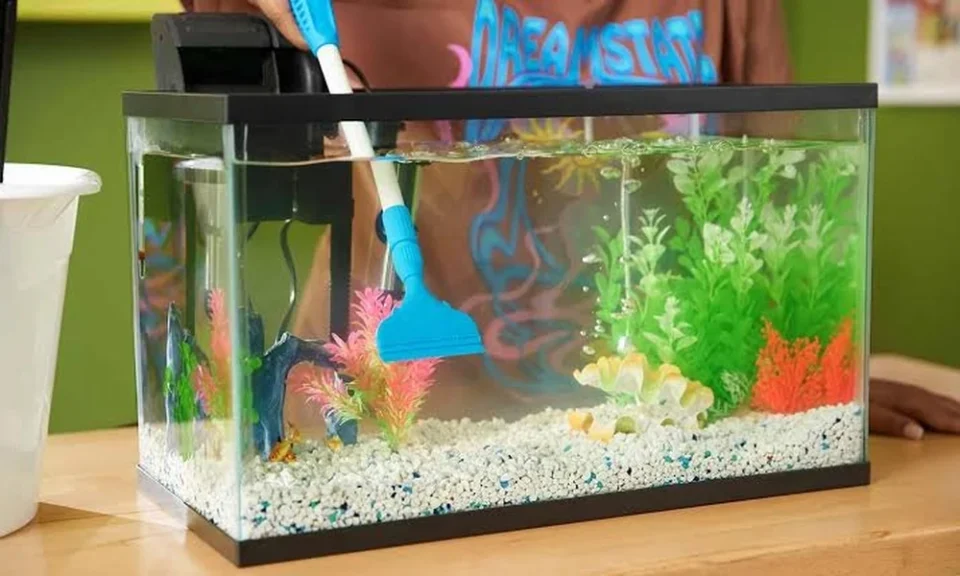
Good aquarium water treatment comes down to three habits: testing your water regularly, removing chlorine and heavy metals before it touches your fish, and staying on top of a consistent cleaning schedule. Skip any one of these and even the best filter in the world won’t keep your tank healthy for long.
Why Does Aquarium Water Treatment Matter So Much?
Fish don’t just swim in their water; they breathe it, and every waste product they produce stays in that same closed system. Untreated tap water often carries chlorine or chloramine, both of which are toxic to fish gills in even small amounts. That’s the first problem aquarium water treatment solves, but it’s far from the only one.
Ammonia and nitrite build up fast in a new or overcrowded tank, and both are lethal well before they’re visible to the eye. Regular treatment and testing catch these problems before your fish show symptoms, not after.
How Do You Test Aquarium Water Correctly?
A test kit is the only way to know what’s actually happening in your tank. Cloudy water isn’t always dangerous, and crystal-clear water isn’t always safe. Testing weekly, and daily during a new tank’s first month, gives you a real picture.
| What to Test | Safe Range | Why It Matters |
| Ammonia (NH3) | 0 ppm | Toxic to fish even at 0.25 ppm. |
| Nitrite (NO2) | 0 ppm | Interferes with oxygen transport in blood. |
| Nitrate (NO3) | Under 40 ppm | Builds slowly; high levels stress fish long-term. |
| pH | 6.5-7.5 (species dependent) | Sudden swings are more dangerous than a stable off-number. |
| Water hardness (GH/KH) | Species dependent | Affects how stable your pH stays over time. |
| Temperature | 74-80°F for most tropical fish | Sudden shifts stress the immune system. |
What Should Go Into Your Aquarium Water Treatment Routine?
A dependable aquarium water treatment routine doesn’t need to be complicated, but it does need to be consistent. Here’s what actually belongs in it:
- Dechlorinator – Neutralizes chlorine and chloramine in tap water within seconds.
- Beneficial bacteria supplement – Speeds up the nitrogen cycle in new tanks.
- Weekly partial water changes – Swap 10-20% of tank water rather than a full change, which can crash your bacteria colony.
- Water conditioner for heavy metals – Binds copper and other trace metals that can leach from pipes.
- pH stabilizer – Only if your test results show your tank’s pH is drifting outside the safe range for your species.
Skipping the dechlorinating step is one of the most common mistakes new fish owners make. Straight tap water can kill fish within hours, even if it looks perfectly clear.
Which Aquarium Cleaner and Fish Tank Cleaner Tools Do You Actually Need?
Water treatment handles chemistry. An aquarium cleaner and fish tank cleaner setup handles the physical mess – algae on the glass, waste on the substrate, and debris clogging your filter. Both matter, and neither replaces the other.
- Algae scraper or pad – For glass walls, choose a magnetic version for tanks over 20 gallons so you’re not reaching into the water each time.
- Gravel vacuum – Doubles as your water-change tool, pulling waste out of the substrate while you drain water.
- Filter media replacement – Swap mechanical filter pads every 2-4 weeks; rinse biological media in tank water only, never tap water.
- Soft aquarium-safe sponge – For decorations and glass; regular household sponges can carry residue that’s toxic to fish.
A good fish tank cleaner kit combined with a steady aquarium water treatment schedule is really the whole game. Most tank problems trace back to skipping one or the other, not some rare disease.
How Do You Clean a Used or Secondhand Aquarium?
Used tanks often carry old algae, mineral deposits, or leftover residue from previous chemicals, none of which you want anywhere near new fish. Start with a full scrub using an aquarium cleaner made for glass or acrylic. Never use household dish soap, since soap residue is nearly impossible to fully rinse out and is toxic to fish.
Soak the tank in a diluted vinegar solution for stubborn mineral deposits. Then rinse it at least three times with clean water before adding anything else. Let the tank sit dry for 24 hours, then start your nitrogen cycle from scratch with fresh aquarium water treatment products before adding a single fish.
Conclusion
A healthy tank isn’t about expensive equipment; it’s about consistency. Test your water weekly, treat it before it ever touches your fish, and keep a simple cleaning routine with the right aquarium cleaner and fish tank cleaner tools on hand. Build that habit early, and most of the problems that stress out new fish owners simply won’t come up.
FAQs
Q. How to treat water in an aquarium?
Add a dechlorinator to neutralize chlorine and chloramine, then test for ammonia, nitrite, and pH before adding fish. Ongoing aquarium water treatment should include weekly partial water changes and periodic checks on hardness and temperature.
Q. What can I put in my fish tank to keep the water clear?
A dechlorinator, beneficial bacteria supplement, and a working mechanical filter are the core of a clear tank. Regular partial water changes matter more than any single additive for keeping water visibly clean long-term.
Q. Is it better to use tap water or distilled water for a fish tank?
Tap water treated with a dechlorinator is usually better, since distilled water lacks the minerals fish need for healthy osmoregulation. Straight tap water without treatment is unsafe due to chlorine and chloramine content.
Q. What is the best cleaner to clean a fish tank?
An aquarium-safe glass cleaner paired with a gravel vacuum covers most routine cleaning needs. Avoid household glass or dish cleaners entirely, since residue from either can be toxic even in trace amounts.
Q. What is the best way to clean a used aquarium?
Scrub with an aquarium-safe cleaner, soak in diluted vinegar for mineral buildup, then rinse at least three times with clean water. Let it dry fully and restart the nitrogen cycle before adding any fish.
