
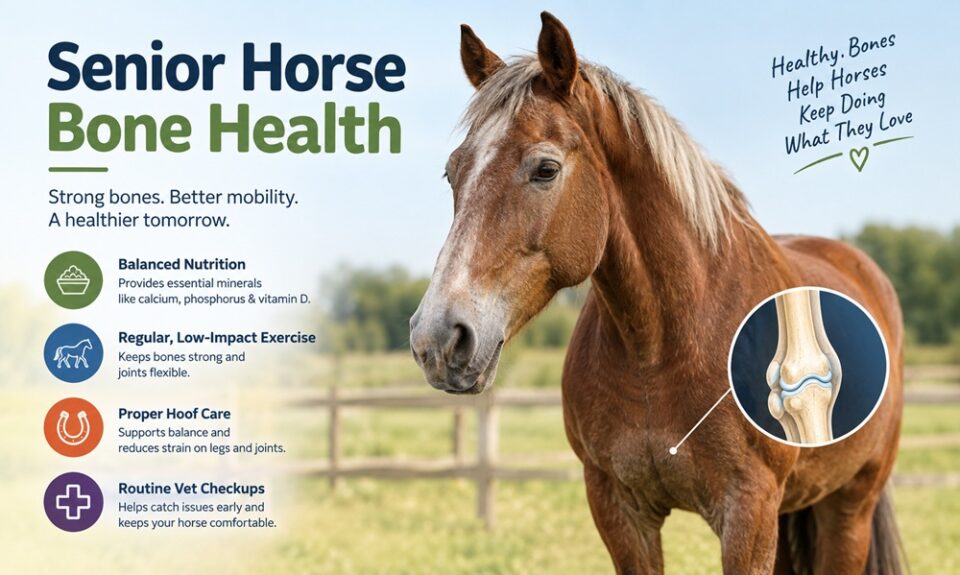
Most horse owners notice the outward signs of aging first: a slightly swayed back, a grayer muzzle, a little more stiffness on cold mornings. What is harder to see is what happens inside the skeleton. Bone is living tissue that constantly breaks down and rebuilds itself, and as a horse moves into its late teens and twenties, that balance tips. The body removes old bone faster than it lays down new bone, mineral density declines, and the skeleton that once absorbed years of trotting, cantering, and turnout begins to lose its margin of safety. For senior horses, that shift is the quiet driver behind fractures that seem to come out of nowhere.
Why Fracture Risk Rises in Older Horses
Bone strength depends on two things working together: enough mineral packed into the bone and a healthy protein framework to hold it in place. Aging affects both. Calcium absorption in the gut becomes less efficient, hormone levels that support bone formation drop, and the cells that build new bone slow down. At the same time, senior horses often move less, and bone responds to load. Less weight-bearing activity means less stimulus to stay dense.
Layered on top of this are common age-related conditions. Pituitary pars intermedia dysfunction (PPID, or equine Cushing’s disease) raises cortisol, which weakens bone. Dental problems reduce chewing efficiency, so an older horse may not extract the full nutritional value from hay even when it has plenty in front of it. Arthritis changes how a horse loads its limbs, concentrating stress on bone that is already less resilient. The result is a skeleton that can fail under forces a younger horse would shrug off, whether that is a slip in mud, a kick from a pasture mate, or an awkward step getting up after rolling.
Early Warning Signs Worth Watching
Bone loss itself is silent, so owners have to read the surrounding clues. Watch for a horse that is reluctant to move out at the trot, hesitates on hard ground, or shows uneven hoof wear that suggests altered loading. A horse that has trouble rising, that lies down more than usual, or that avoids being the one to run when the herd takes off may be protecting a skeleton that no longer feels secure. Sudden, unexplained lameness in an older horse should always prompt a veterinary exam, because stress fractures in the pelvis, tibia, or cannon bone can present as vague soreness long before they become catastrophic.
Nutrition: The Foundation of Skeletal Support
Feeding a senior horse for bone health means looking past calories. The core minerals are calcium and phosphorus, ideally in a ratio close to 2:1, along with magnesium, which is often overlooked but essential for calcium deposition. Trace minerals such as copper, zinc, and manganese support the collagen matrix that gives bone its flexibility rather than brittleness.
Vitamin D drives calcium absorption, and while horses on pasture make their own from sunlight, stalled seniors or those in northern climates during winter may fall short. Vitamin K also deserves more attention than it typically gets. It activates osteocalcin, the protein that binds calcium into the bone structure, and the natural K1 found in fresh grass declines sharply in dried hay. For horses on hay-heavy diets, a targeted product such as the BoneKare equine bone health supplement can help restore what the forage no longer provides.
Protein quality matters as well. Older horses need adequate amino acids, particularly lysine, to maintain both muscle and the protein scaffold within bone. A senior feed formulated with digestible fiber and balanced protein is usually a better base than simply adding more grain.
Exercise That Builds Rather Than Breaks
Complete rest is not a safe answer. Bones grow stronger under consistent, moderate loading and weaken without it. The goal for a senior horse is regular movement that stimulates the skeleton without overwhelming it. Daily turnout on good footing is the single most valuable habit. Light ridden or in-hand work several times a week, kept on even ground and free of sharp turns or deep footing, adds controlled stress that signals bone to maintain density. Risk climbs when you introduce sudden bursts of high-impact activity after long idle periods, so build fitness gradually and keep it steady.
Management Choices That Lower Risk
Small environmental decisions add up. Keep paddocks free of holes, frozen ruts, and slick mud. Provide non-slip flooring in stalls and aisles. Manage herd dynamics so an older horse is not repeatedly chased or kicked. Stay current on dental care so nutrients are actually absorbed. Work with your veterinarian on regular bloodwork to catch PPID or other metabolic issues early, since treating the underlying condition indirectly protects bone.
Fracture prevention in senior horses is not a single intervention but a pattern of care sustained over years. Sound nutrition, sensible movement, a safe environment, and attentive observation each close part of the gap that aging opens. Horses can remain comfortable and active well into their twenties and beyond when you treat their skeletons as the living, responsive tissue they are. Protecting bone starts long before the first sign of trouble, and it pays off every day an old horse trots out sound.
