
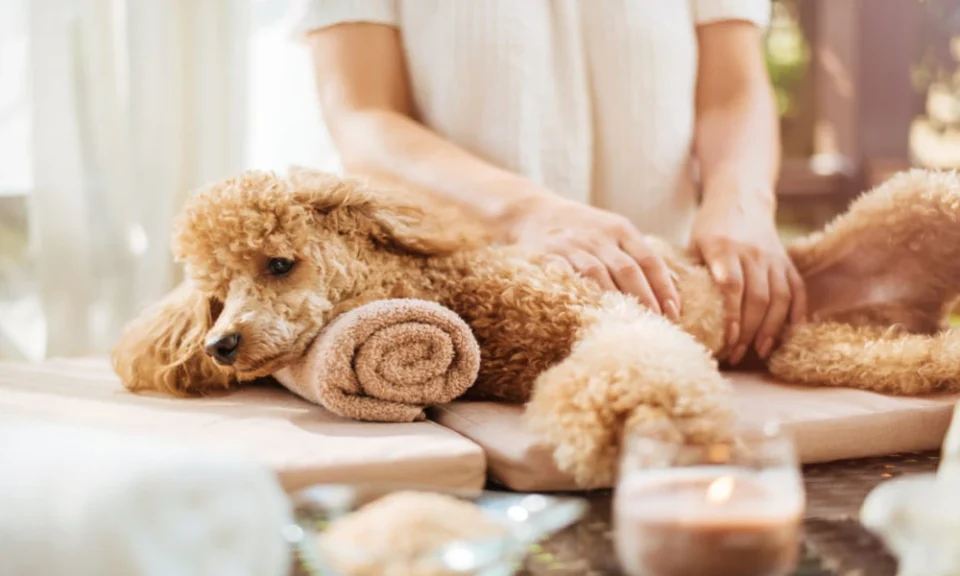
Long before massage therapy had a name or a certification process, people were putting their hands on animals to soothe them. Grooms rubbed down horses after long rides. Shepherds worked knots out of a dog’s shoulders after a day herding sheep. None of this was formal medicine. It was instinct, the same instinct that makes a person rub a sore muscle without thinking twice about it. But somewhere between those early instincts and today’s veterinary clinics, massage became a documented, studied, and increasingly respected part of animal care.
Ancient and Early Roots
The earliest written references to therapeutic touch for animals go back thousands of years. Ancient Chinese texts on animal husbandry describe manual therapies used on horses and working oxen, often alongside acupuncture points, since the two practices developed in tandem in many parts of Asia. Greek and Roman horsemen wrote about rubbing down cavalry horses not just for cleanliness but to keep muscles loose before battle. These early practices were rarely separated from general grooming, so it’s hard to say exactly when someone first treated massage as medicine rather than maintenance. Still, the pattern is clear. Wherever humans depended on animals for labor, war, or survival, someone eventually noticed that a sore, tight animal performed worse than a loose, relaxed one.
The Shift Toward Formal Veterinary Interest
For most of history, animal massage stayed in the hands of trainers, grooms, and horsemen rather than veterinarians. Vets were focused on disease, injury, and surgery, the kinds of problems that could kill an animal outright. Soft tissue comfort simply wasn’t a priority when infection and lameness were the bigger threats. That began to change gradually through the twentieth century as veterinary medicine matured and started borrowing more heavily from human physical therapy. Sports medicine for humans had already demonstrated that manual therapy could speed recovery and prevent injury, and it didn’t take long for people working with performance horses and competition dogs to ask whether the same principles applied to their animals.
By the 1970s and 1980s, a handful of veterinarians and animal physical therapists in the United States and Europe began publishing early work on canine and equine massage. Much of this research was small in scale, often based on case observations rather than controlled trials, but it was enough to plant a seed. Racehorse trainers, always looking for a competitive edge, were among the first to formally hire massage therapists as part of a horse’s regular conditioning routine. What started as a niche practice for elite athletes slowly filtered down to general animal care over the following decades.
Medical Massage for Animals Becomes Its Own Field
The term medical massage for animals started appearing more consistently in veterinary literature and continuing education programs in the 1990s and early 2000s. This distinction mattered. It separated a technical, clinically informed practice from the casual rubdown a groom might give a tired horse. Medical massage for animals is typically performed with a specific therapeutic goal in mind, whether that’s reducing scar tissue after surgery, improving range of motion in an arthritic joint, or managing lymphatic swelling. It requires an understanding of anatomy, pathology, and how different techniques affect circulation and the nervous system.
Practitioners of medical massage for animals often work directly under veterinary supervision, especially in postoperative cases. A dog recovering from a torn cranial cruciate ligament, for example, might receive massage as part of a broader rehabilitation plan that also includes controlled exercise and sometimes hydrotherapy. The massage isn’t just about comfort in these cases. It helps reduce compensatory muscle tension that develops when an animal favors one limb over another, which if left untreated can create a whole new set of problems.
Certification programs for this kind of work have grown substantially. Schools now offer courses specifically in canine and equine massage, some requiring over one hundred hours of hands on training before a therapist can sit for certification exams. Several states in the U.S. require that animal massage therapists work under the direction of a licensed veterinarian, which has pushed the field closer to mainstream veterinary practice rather than keeping it as an independent alternative therapy.
Veterinary Integrative Health and the Bigger Picture
Massage didn’t rise on its own. It rose alongside a broader movement within the profession that came to be known as veterinary integrative health. This approach treats conventional veterinary medicine and complementary therapies like massage, acupuncture, and chiropractic care as pieces of the same puzzle rather than competing philosophies. A veterinarian practicing under a veterinary integrative health model might diagnose a condition using standard bloodwork and imaging, then build a treatment plan that includes medication alongside massage or other manual therapies, adjusting as the animal responds.
The growth of veterinary integrative health programs at university veterinary schools has been one of the clearer signs that massage and related therapies are no longer considered fringe. Colorado State University, the University of Tennessee, and several other institutions have developed integrative medicine departments or continuing education tracks that include manual therapy training. These programs generally require a veterinary degree as a prerequisite, reinforcing the idea that this is an extension of medical training rather than a separate, unregulated practice.
Massage in Modern Rehabilitation Medicine
Veterinary rehabilitation as a specialty didn’t really exist in a formal sense until the late 1990s, when the first certification programs for canine rehabilitation therapists were established. Massage became one of several tools rehabilitation specialists use, sitting alongside underwater treadmills, therapeutic ultrasound, and targeted exercise programs. Dogs recovering from orthopedic surgery, spinal injuries, or even amputations are frequently given massage as part of a broader recovery protocol designed to maintain muscle mass and circulation while the animal’s mobility is limited.
Older animals have become another major focus. Senior dogs and cats dealing with arthritis often can’t tolerate the same medications long term that a younger animal might, so massage has increasingly been positioned as a lower risk way to manage stiffness and discomfort. It won’t reverse joint degeneration, but many owners and veterinarians report that regular sessions seem to improve comfort and willingness to move, which in turn helps maintain a healthier weight and slows the cycle of decline that often comes with reduced activity.
Where the Practice Stands Today
Massage for animals today sits in an interesting space between wellness trend and legitimate clinical tool. Plenty of pet owners book massage sessions purely because their dog or cat seems to enjoy it, with no specific medical goal attached, and that’s a fine reason on its own. But the clinical side has matured considerably. Veterinary schools that once ignored the topic entirely now include at least some coverage of manual therapies in their curricula, and continuing education in this area continues to expand as more practicing veterinarians seek additional training.
Insurance coverage remains inconsistent, and access varies a lot depending on where an owner lives, since certified animal massage therapists are still far more concentrated in areas with a strong horse or performance dog culture. Even so, the trajectory over the past several decades has been steady. What began as an unspoken instinct passed down through generations of grooms and horsemen has become a documented, taught, and increasingly research backed part of how animals are cared for, one that continues to grow more integrated into standard veterinary practice each year.
