
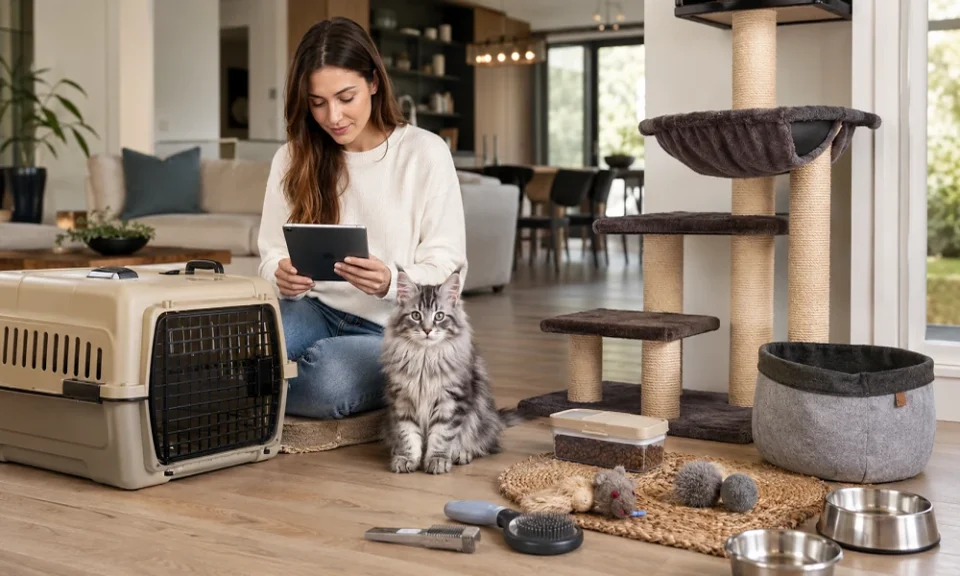
A Maine Coon kitten may capture attention with a long coat, tufted ears, broad paws, and an expressive face. Yet bringing one home is also a financial commitment that continues long after the initial payment. A sound budget should cover the kitten’s start, everyday care, preventive health needs, and the unexpected events that can arise during a cat’s life.
The goal is not to predict every dollar. Food choices, veterinary fees, insurance premiums, and household needs vary. Instead, prospective owners can identify the main spending categories and decide whether they can support a large, slow-maturing cat comfortably.
Start With What the Placement Fee Includes
Coon Spire currently lists its kittens at $3,500 to $4,500. Standard kittens generally fall between $3,500 and $4,000, while shaded, select premium-color, and polydactyl kittens are commonly priced from $4,000 to $4,500. Individual traits, age, color, coat expression, and placement terms may affect the final amount.
When assessing the Maine Coon Cat price, buyers should examine what comes with the kitten. Coon Spire’s published placement preparation may include spaying or neutering when applicable, microchipping, age-appropriate FVRCP vaccinations, parasite prevention, veterinary records, registration documentation when applicable, a health guarantee, parent health information, starter food, and transition guidance.
These inclusions can reduce some immediate costs, but they do not replace future care. Before reserving a kitten, ask for a written breakdown and confirm which items apply to that specific placement.
Prepare the Home for a Large Cat
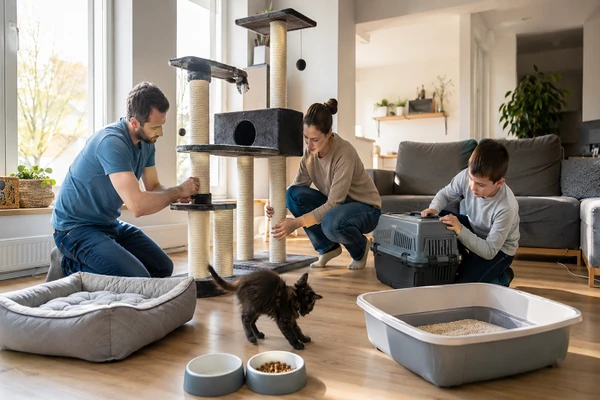
Maine Coons need the same basic supplies as other cats, but size matters. A small carrier, short scratching post, or compact litter box may be outgrown. Budget for a sturdy carrier, spacious litter boxes, a stable scratching tower, washable bedding, food and water bowls, grooming tools, toys, and safe climbing or resting areas.
The International Cat Association’s Maine Coon breed profile states that mature males average 13 to 18 pounds and females average 9 to 13 pounds. It also notes that the breed can take three to five years to reach full size. Buying durable, appropriately sized equipment early may be more economical than replacing undersized items repeatedly.
Kitten-proofing may require cord covers, secure screens, protected houseplants, and storage for breakable objects. These are modest purchases, but they belong in the setup budget.
Allow for Food, Litter, and Routine Supplies
Food and litter are the most visible recurring expenses. The right food and portion depend on the cat’s age, body condition, activity, and medical needs, so owners should follow veterinary guidance rather than assume that a larger breed always needs a very large serving.
Track the monthly cost of complete and balanced food, litter, waste bags, replacement scratchers, dental-care products, treats, and toys. Prices can change, and a diet may need to change as the kitten grows. A small monthly cushion can prevent routine increases from disrupting the household budget.
Build Veterinary Care Into Every Life Stage
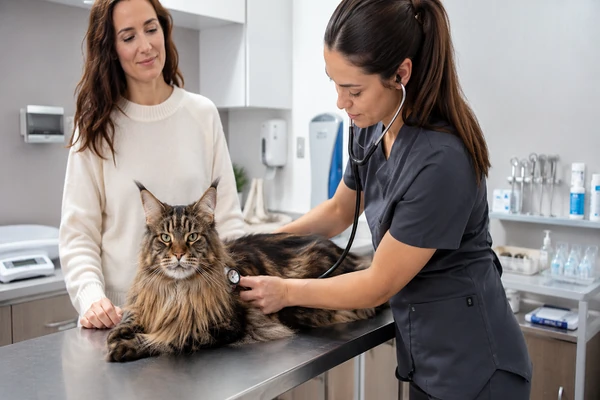
Care provided before placement is only the beginning. Owners should plan for an initial examination with their own veterinarian, future vaccine decisions, parasite control, dental care, diagnostic tests when indicated, and treatment for illness or injury.
The AAHA-AAFP feline life-stage guidelines organize healthcare around kitten, young-adult, mature-adult, and senior stages. They cover nutrition, oral health, vaccination, parasite control, behavior, environmental needs, and age-appropriate diagnostics. This is a useful reminder that annual costs can change as a cat matures.
Pet insurance is optional, and policies differ in exclusions, deductibles, reimbursement limits, and waiting periods. Families who do not choose insurance can create a dedicated emergency fund instead. Either approach should be arranged before an urgent problem appears.
Plan for Coat Care and Enrichment
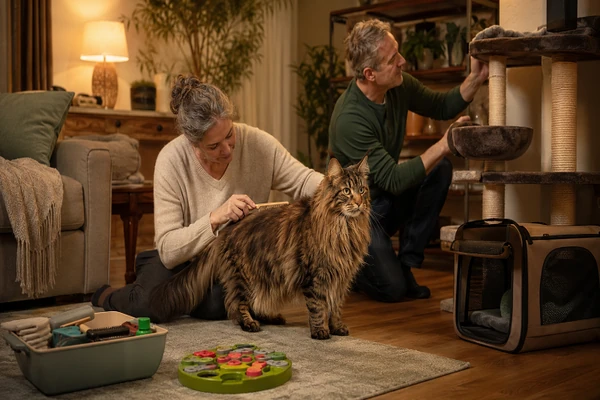
The Maine Coon’s coat may need weekly combing, while some coat textures require more frequent attention. A quality comb, brush, nail trimmer, and basic dental supplies are sensible purchases. Professional grooming may also be needed if the coat mats or home care becomes difficult.
Interactive play, climbing spaces, puzzle feeders, and scratchers support physical and mental activity. Enrichment does not need to be extravagant, but worn or damaged items will need replacement over time.
Compare Value, Not Just the Initial Figure
When comparing the Maine Coon price, separate the one-time placement fee from setup costs, monthly essentials, annual care, and emergency reserves. Also review health records, contract terms, breeder communication, socialization, and post-placement support. Delivery, when required, may add another expense.
A clear budget protects both the family and the cat. Review Coon Spire’s published pricing and inclusions, calculate the ongoing costs that fit your household, and submit a kitten application only when the full commitment feels manageable.
